A balcony room typically refers to a hotel or accommodation room that includes a private balcony—an outdoor platform extending from the room, usually enclosed by a railing or balustrade. Balcony rooms are often preferred by guests who enjoy fresh air, natural light, scenic views (such as ocean, cityscape, or mountain vistas), or simply a private outdoor space to relax.
Common Features of a Balcony Room:
Private outdoor access directly from the room
Seating (e.g., chairs, small table, or lounge chairs)
Glass doors or large windows leading to the balcony
Views that may include beaches, pools, gardens, or urban skylines
Higher price compared to standard rooms without balconies
Tips When Booking a Balcony Room:
Check the view: Not all balconies offer desirable views—some may overlook service areas or adjacent buildings.
Safety: If traveling with children or pets, confirm balcony safety features (e.g., secure railings, height).
Noise level: Balconies facing streets or entertainment areas might be noisier.
Weather considerations: In colder or rainy climates, a balcony may be less usable.
Would you like help finding or comparing balcony rooms for a specific destination or hotel?
This is a tutorial about the video rendering function. The article is mainly divided into two parts. The first part is 「How to quickly create a video with template path」, and the second part is 「How to customize the video path and model motion effect for grow animation」, which will help you master the operation process of the video rendering function.
「How to quickly create a video with template path」
1.First, after finishing the floor planning and decoration, click "Render" to enter the rendering interface.
2.After entering the rendering interface, click the "Video" tab to switch to the video editing interface. (When you enter the video editing interface for the first time, you can refer to the basic guide of video recording.)
3.You need to set the appropriate resolution according to your needs. (540p video would cost 10 Homestyler points and 720p costs 20 points, while 1080p video shall be purchased on-the-go or with the subscription)
4.Select "Aspect Ratio" to set the ratio of the view.
5.Adjust proper lighting and Environment (similar to image rendering)
6.Click "Add Clip" below to select "Draw a straight path" or "Draw a curved path" to draw a template path on the plan.
7.Left click on the plan view to draw the path.
8.If you want the camera to always point to a certain model while moving in the video, please select the path and open the "Target Mode" in the right panel, then adjust the position and height of the focus point. This is very helpful for close-up shots of the model.
9.When you want a wider viewing angle, you could adjust the FOV. If you want to skip some view obstruction, you could turn on "Clipping" in the property panel on the right and adjust the cut depth.
10.After complete the setting, you can click the position below to set the video duration.
11.Then, select the button below to set the clip as "grow effect" or "no effect (walkthrough effect)"
12.When you have generated two or more paths, you may need the following path adjustment options.
·Click "Clip Sequence Number". Set the path number. When you have more paths, it can help you quickly recognize clips.
·Click the "More" button and select "Delete Clips" to delete unnecessary clips.
·Click "Enable/Disable Clip" to disable the clip if you want to preserve a video clip but do not want it to appear in the final rendered video.
·Select the path and drag it, you can quickly adjust the order of clips.
13.After finishing, first switch to 3D view to preview the video. If the preview is ok, click "Generate Video" to render.
「How to customize the video path and model motion effect for grow animation」
If you need more custom operations, you can enter the "Advanced Mode"
"Advanced Mode" supports custom keyframes or secondary editing of straight or curved paths, and also supports separate motion effect settings for each model.
1.Enter the "Advanced Mode" interface.
2.After adjusting the appropriate angle of view in the viewfinder, select "Add Clip"-"Add Key Frame"
3.Continue to adjust the camera parameters, click the "Camera" button to take more key frames
4.The key frames will be displayed at the bottom of the page, if you add a mistake, you can click any frame to delete.
5.Switch to the 2D view and drag the key frame position to quickly adjust the camera movement track.
6.After the custom path is determined, you can set the "Grow Effect" or "No Effect (Walkthrough Effect)" to the clip.
7.Take the "grow effect" as an example. After setting to "Grow Effect", switch to 3D view, click on the model that needs to be set (you cannot select models in 2D view), set the dynamic effect in the "Motion Settings" on the left, then you can view the animation effect in the preview after setting.
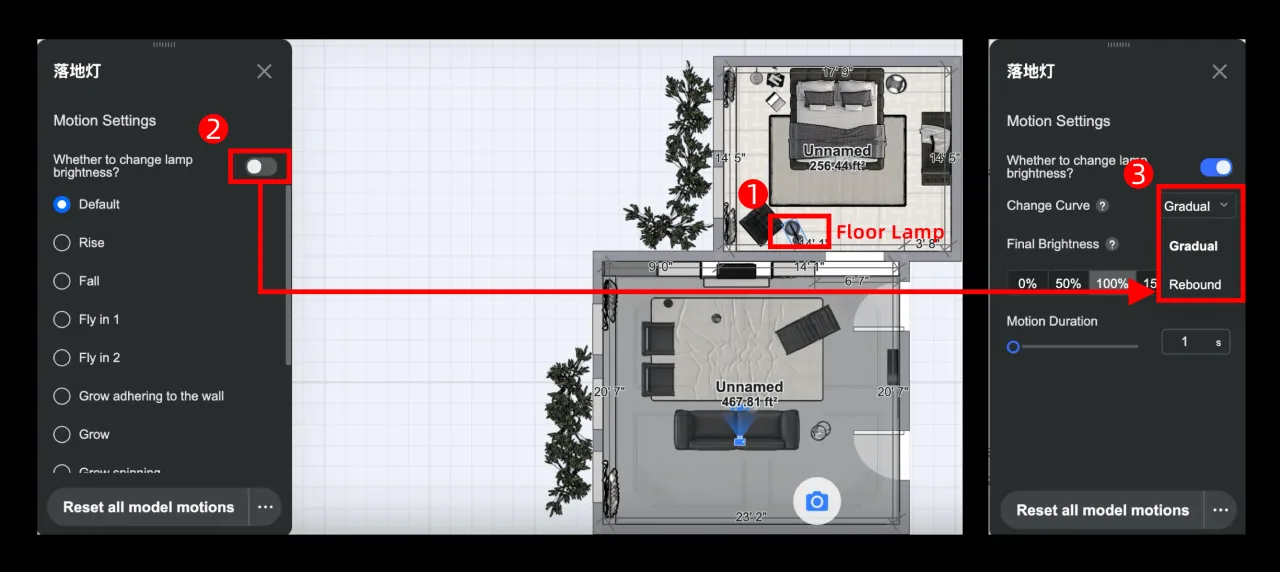
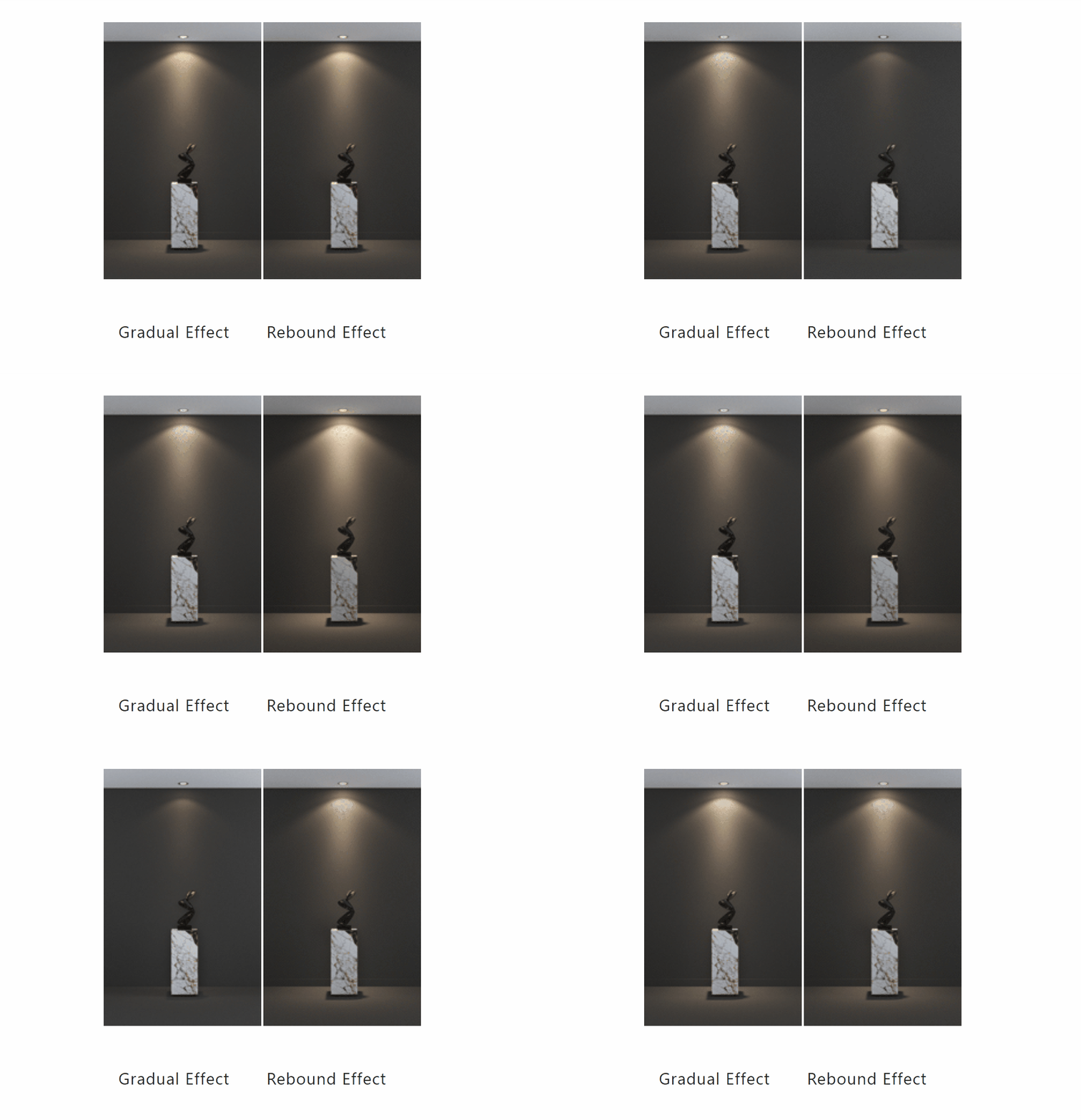
If you need to set the lighting effects of the fixtures in the video, enter "Rendering""Video" and select "Advanced Mode", click on the fixtures that need to set brightness changes, and turn on "Whether to change the lamp brightness" and set “Gradual“ or ”Rebound“ in "Change Curve" Effect.
The following are “Gradual“ or ”Rebound“lighting effects:
8. Return to the video interface, determine the rendering parameters, check the preview, and directly proceed to "Generate Video" after the preview is correct.
Afterwards, you could go to "Images"(the album) to view the rendering progress and the final rendered video.
toDay i DrinK coffee finish
RSV viruS
It seems like you might be referring to RSV, which stands for Respiratory Syncytial Virus—not "RSv viruS." RSV is a common respiratory virus that usually causes mild, cold-like symptoms but can be serious, especially in infants, older adults, and people with weakened immune systems.
Key Facts About RSV:
Symptoms: Runny nose, cough, sneezing, fever, wheezing, and decreased appetite. In severe cases, it can lead to bronchiolitis or pneumonia.
Transmission: Spreads through droplets when an infected person coughs or sneezes, or by touching contaminated surfaces.
At-risk groups:
Infants (especially under 6 months)
Older adults (65+)
People with chronic heart or lung disease
Those with weakened immune systems
Prevention:
Frequent handwashing
Avoiding close contact with sick individuals
For high-risk infants, a monoclonal antibody (nirsevimab) is available for prevention.
Vaccines are now approved for older adults and pregnant people (to protect newborns).
If you meant something else by "RSv viruS," feel free to clarify!




Comments
Post a Comment